
Late Summer in the Sierra: The Season Begins to Shift
There is a point every summer in the Sierra when things begin to feel a little different.
August is still summer, of course. The afternoons can be hot, the lakes are still calling and there are plenty of long days left for hiking, camping and getting outside.
But look closely and the mountains are beginning to change.
Creeks that were rushing earlier in the season are quieter. Waterfalls have lost some of their spring power. Trails are dustier. Grasses have turned golden at lower elevations. Fire danger becomes harder to ignore.
And even though fall may still seem a long way off, daylight is slowly beginning to surrender a few minutes at each end of the day.
Late summer has arrived in the Sierra.
The Water Tells the Story
Perhaps nowhere is the seasonal change more obvious than around the water.
Much of the Sierra’s summer water comes from winter snowpack, and by August the runoff that filled rivers and waterfalls during spring has diminished considerably.
In Yosemite, the National Park Service reports that Yosemite, Vernal, Nevada and Bridalveil falls are now running low. The park entered summer with a below-average snowpack — just 25 percent of average in the Tuolumne River basin and 20 percent in the Merced River basin as of May 1.
Yosemite Falls can sometimes slow to little more than a trickle or even become dry by August, while perennial waterfalls including Vernal, Nevada and Bridalveil continue flowing but at considerably reduced levels.
For hikers and backpackers, diminishing water is more than a change in scenery.
Water sources that were dependable earlier in the summer can become smaller or disappear altogether as the dry season progresses. That makes knowing where reliable water is located — and carrying enough between sources — increasingly important on longer trips.
The High Country Hits Its Sweet Spot
Late summer also brings some of the year’s best opportunities to explore the Sierra high country.
By July, Yosemite reported that snow had disappeared from all but the highest elevations. Trails that required navigating snow earlier in the season become considerably easier to follow, although downed trees, muddy areas and other obstacles can remain.
The tradeoff is that the landscape is drying quickly.
High-country meadows can still hold wildflowers, and Yosemite notes that the subalpine wildflower season around Tuolumne Meadows extends into late summer.
For anyone who spent June waiting for snow to melt from favorite trails, August can feel like the reward.
The high country is finally wide open.
Fire Becomes Part of the Equation
At lower elevations, however, the same drying process changes the calculation.
Yosemite implemented increased fire restrictions Aug. 7 after officials cited hot, dry weather, low fuel moisture and winds that could contribute to rapid wildfire growth. Wood and charcoal fires are currently prohibited below 8,000 feet except in certain designated campgrounds and picnic areas.
It’s another sign of the season.
Vegetation that was green during spring has cured. Forest fuels continue drying. A campfire, spark or other ignition that might have remained small under different conditions can become considerably more consequential.
Smoke also becomes something worth checking before heading out.
The National Park Service notes that smoky or hazy conditions are common in Yosemite during August and September, sometimes because of fires many miles away. The park advises visitors to be prepared for changing air quality during late summer.
That same reality extends well beyond park boundaries throughout the Sierra.
The Trail Changes Too
The practical rhythm of a hike changes as summer gets older.
Hot, exposed trails can make an early start considerably more appealing than they were in spring. Yosemite recommends planning strenuous hikes during cooler portions of the day and carrying plenty of fluids and electrolytes during periods of high temperatures.
There are smaller seasonal changes as well.
Some trails become increasingly dusty. Vegetation can encroach on less-traveled routes. Fallen trees from winter storms may still create obstacles in remote areas.
Wildlife remains active, too. Yosemite currently reports bears active throughout the park and reminds visitors to properly store food and maintain appropriate distances from wildlife.
And the sun that seemed reluctant to disappear in June is beginning to set earlier.
For hikers accustomed to squeezing every minute out of a summer evening, that gradually shrinking window is worth remembering — particularly on longer hikes where an unexpected delay can turn the final mile into a walk after dark.
Still Summer — Just a Different Version
None of this means it’s time to put away the hiking boots, paddleboards or camping gear.
Quite the opposite.
Late summer can offer some of the best days of the year in the Sierra.
High-country trails are accessible. Mountain lakes have warmed from their early-season chill. The crowds of the biggest summer weekends eventually begin to ease, and before long the first hints of fall will start appearing at higher elevations.
But August asks for a slightly different kind of attention than June.
Carry more water. Start earlier when the day will be hot. Check fire restrictions and air quality before leaving home. Don’t assume the creek you crossed earlier in the summer will still be running the same way.
And maybe notice the little things.
The golden grass.
The quieter creek.
The slightly earlier sunset.
Summer isn’t finished in the Sierra.
But if you’re paying attention, you can already feel the mountains beginning to turn the page.
———-
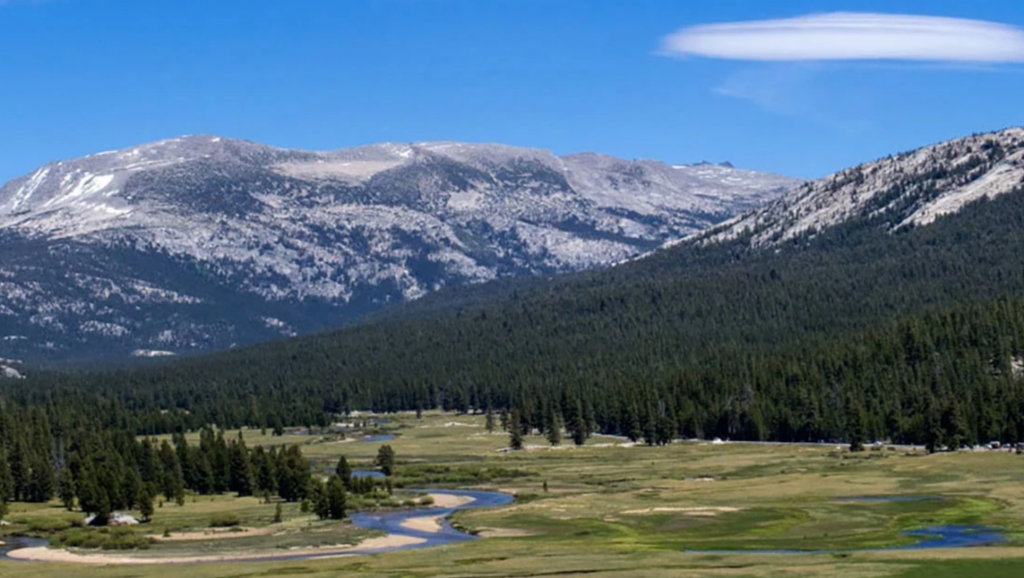
Feature Photo: The Tuolumne River winds through Tuolumne Meadows in Yosemite’s high country. By late summer, the Sierra begins showing subtle signs of the changing season.
Photo Credit: National Park Service