By Sal Maccarone
Impressionism is a theory and practice in painting that simulates reflected light through dabs and strokes of paint. This painting approach was originally conceived by French painters who lived and worked during the late 19th century. The Impressionist movement received its name as a result of a Claude Monet work titled “Impression Sunrise.” This painting received a satirical review in a newspaper which ultimately branded the whole movement as “Impressionism.” Ordinary subject matter coupled with an illusion of motion and an accurate rendering of light were the trademarks of their paintings.
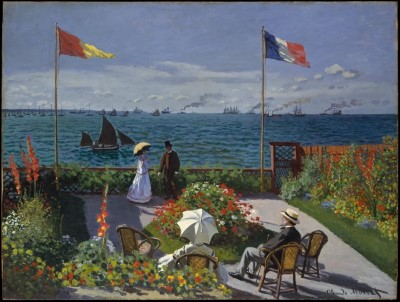
A painting by Claude Monet.
Like so many artistic upheavals, the Impressionist movement was actually a revolution. An alliance was formed by a group of artists for the purpose of exhibiting their art. This was contrary to the politics of that era. At that time, the government of France dictated what artworks, and consequently what artists, were acceptable. Pierre Renoir, Claude Monet, Camille Pissarro, Alfred Sisley and Paul Signac were just a few of the names from the original movement. They all worked closely together, and were in turn influenced by each other’s work.

The Boulevard Montmartre, by Camille Pissarro.
Radicals in their time, the Impressionists broke the rules simply by doing their painting out of doors in nature. These artists would sometimes paint the same scene at different times of the day with very different results. They were not interested in painting subjects from history, but rather, scenes from their own time. This revolutionary way of painting was a precursor to many artistic movements that followed including: Post-Impressionism, Surrealism and modern art.
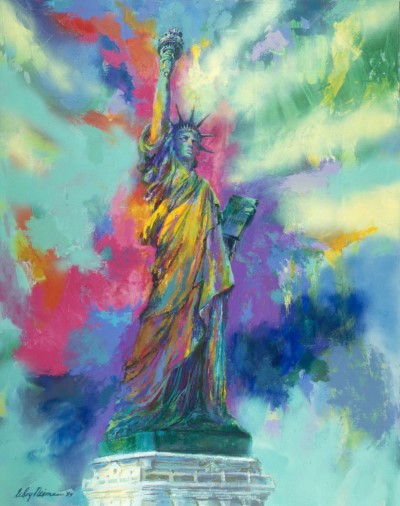
LeRoy Neiman’s 1985 “Statue Of Liberty.”
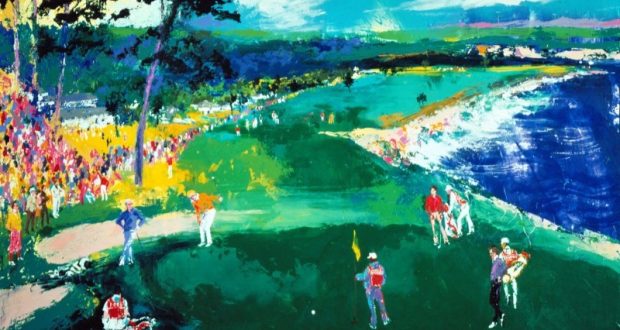
One hundred years later, during the 20th century another luminary artist single handedly showed us that the impressionism was still alive. LeRoy Neiman (1921 -2012) was an American artist who blended vibrant color with broad brushstrokes as a way of documenting sports and celebrity. “Dynamic” would be one way to describe his work. LeRoy Neiman sports drawings became an art genre all its own. No other artist had ever captured events and people the way that he did. As the official illustrator for the Olympics from 1960 through 1984, his sports paintings were published and recognized all over the world.
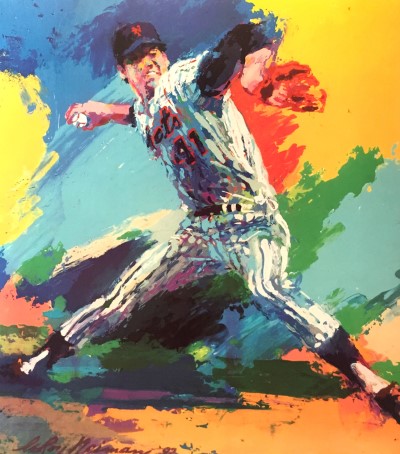
LeRoy Neiman’s “Tom Seaver.”
As both an illustrator and a painter, LeRoy Neiman’s career would span seven decades. His paintings of people such as Muhammad Ali, Joe Namath, Willie Mays, Frank Sinatra and Sylvester Stallone are unique and timeless. Toward the end of his life, he was quoted as saying, “I borrow colors from life to emphasize the spirit of the subjects that I paint.”
Sal Maccarone
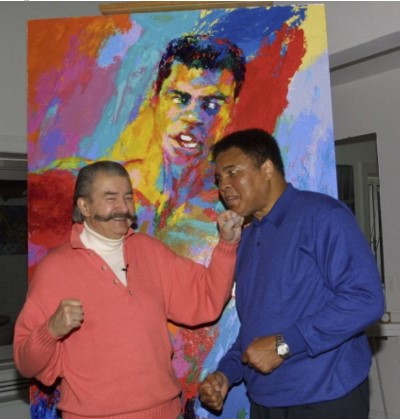
Muhammad Ali with LeRoy Neiman.