
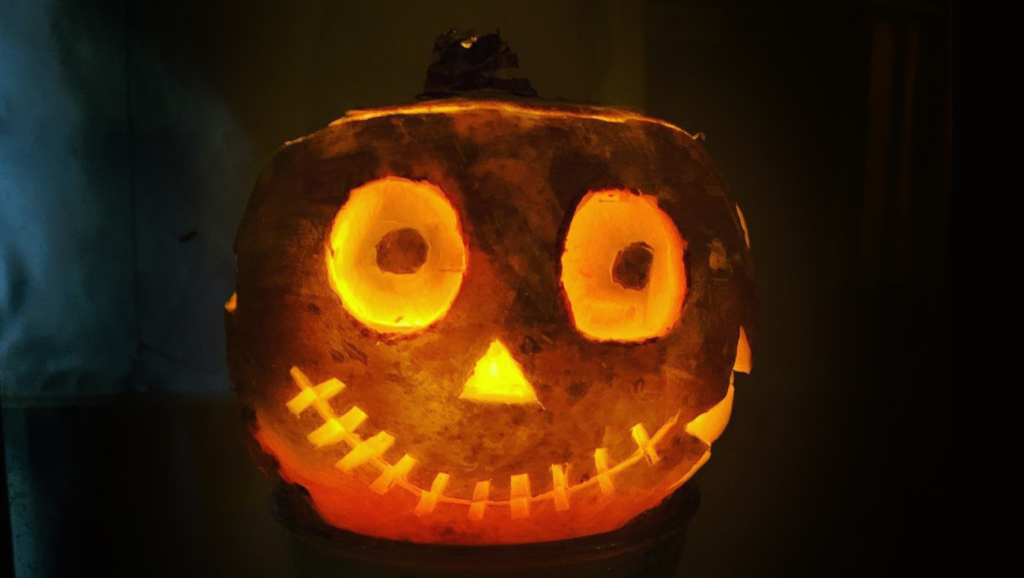
Before Pumpkins, There Were Turnips
A glowing pumpkin on the porch feels like Halloween in its most familiar form. Triangle eyes, a crooked grin and a little light inside are enough to turn an ordinary doorstep into part of the celebration.
But before pumpkins became the face of Halloween, another vegetable had the job.
The turnip.
Smaller, harder to hollow out and capable of looking surprisingly unsettling, carved turnips are part of the history behind today’s jack-o’-lanterns. And they’re only the beginning of Halloween’s stranger traditions.
A Lantern With a Legend
According to the National Museum of Ireland, people in Ireland carved frightening faces into turnips, placed candles inside and used the lanterns to scare others on October 31.
The museum connects the jack-o’-lantern’s name to a folktale about Jack, a man unwelcome in both heaven and hell. Condemned to wander, he carried a lantern to light his way.
That’s folklore, of course. But the vegetable lanterns were real.
In 1943, the museum received a turnip lantern from a schoolteacher near Fintown in County Donegal. She described it as the kind traditionally made in that locality around 1900. Museum artist Eileen Barnes created a painted plaster cast, preserving the appearance of something that otherwise would have rotted away.
The museum describes the familiar pumpkin lantern as an American development of the Irish tradition.
So that pumpkin on the porch has a family history—and a rather unusual ancestor.
When Halloween Played Matchmaker
Halloween’s older celebrations weren’t entirely concerned with frightening people. Some were about finding romance.
Historical newspapers collected in the Library of Congress’s Chronicling America archive describe games meant to reveal a future spouse. A National Endowment for the Humanities look at those accounts includes an apple-peeling custom: toss the peel backward and look for the initial of a sweetheart in the shape it made.
Nuts offered another supposed glimpse into the future. Placed near a fire, a pair could represent two potential partners. How they burned or popped was interpreted as a prediction about the relationship.
Think of it as a Halloween party game with considerably higher imagined stakes than winning a costume contest.
A Holiday That Kept Changing
The same newspaper archive shows Halloween celebrations evolving through pranks, parties, costumes and sweets. A 1917 account from Washington, D.C., described costumes and masks, with fake mustaches particularly popular. A 1920 New York advertisement offered Halloween shoppers chocolate goblin faces and other candies.
The details have changed, but some of the ingredients still sound familiar: something sweet, something silly and an excuse to spend an evening together.
This Halloween, take another look at the jack-o’-lantern by the door. Behind that familiar orange grin is a wandering character from folklore, an Irish carving tradition and generations of people finding their own ways to celebrate.
And if carving a pumpkin feels like a chore, imagine starting with a turnip.
———
Feature Photo: A modern carved turnip lantern reflects a Halloween tradition that predates pumpkin jack-o’-lanterns.